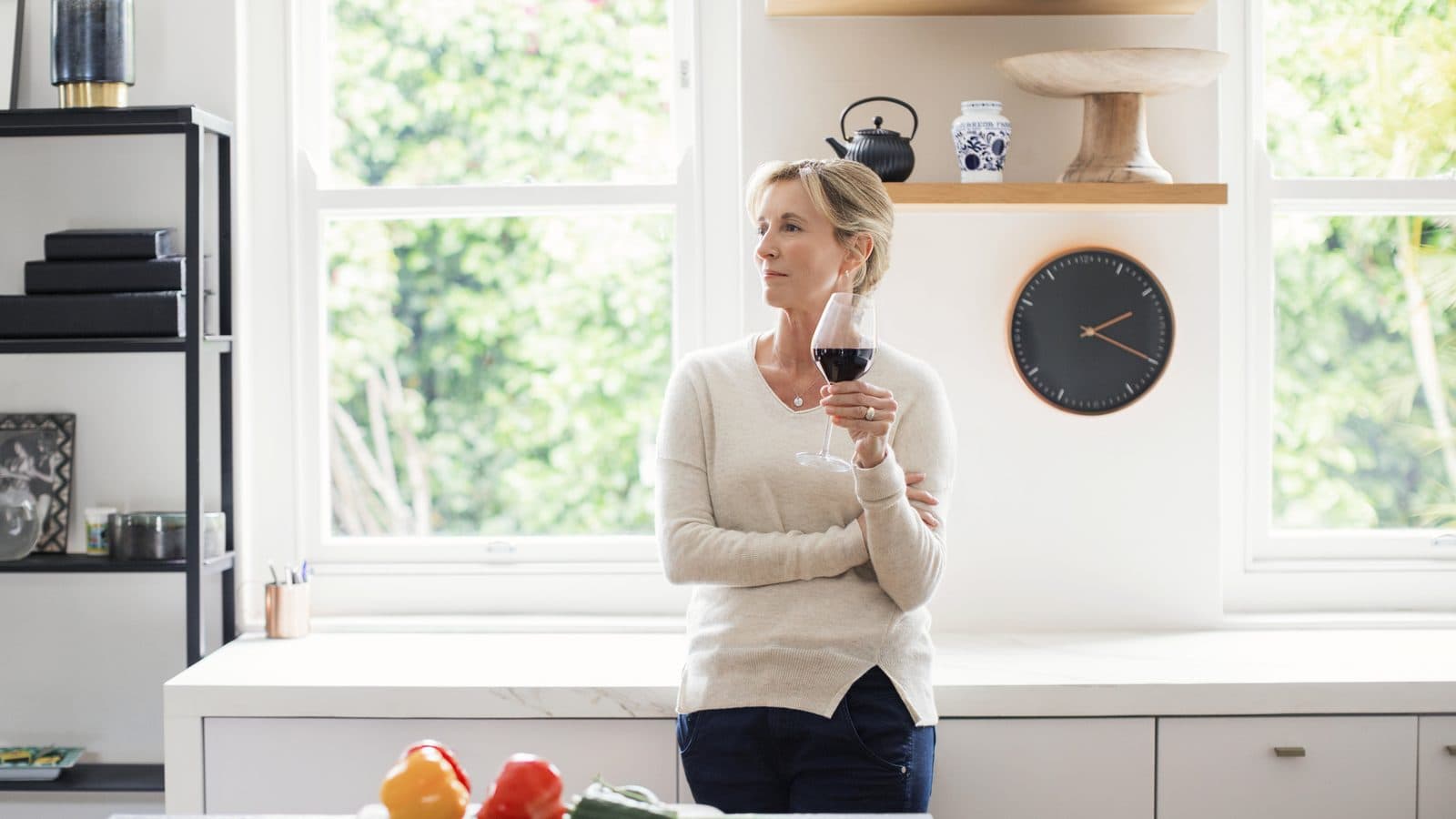
You do not black out. You have never missed work. Nobody in your life has staged an intervention. And yet the nightly glass of wine has quietly become two, you drink to take the edge off more than you drink to celebrate, and the last time you tried to take a month off, you did not make it two weeks. If that sounds familiar, there is a name for it: gray area drinking, also spelled grey area drinking. It describes drinking that falls between social use and severe alcohol use disorder, and it is far more common among women than most people realize.
This post explains what the term means, offers a non shaming self check, and lays out what help looks like at every point on the spectrum. You do not have to call yourself an alcoholic to take any of it seriously.
What Is Gray Area Drinking?
Gray area drinking is alcohol use that sits between occasional social drinking and severe alcohol use disorder. A gray area drinker usually functions well on the outside, rarely hits dramatic consequences, and does not identify with the word alcoholic, yet drinks more often or more heavily than she wants to and finds cutting back harder than expected.
The term is not a formal diagnosis. It is popular language for something clinicians have described for years: drinking that has started to cause quiet friction, even though it would not necessarily meet the criteria for a severe disorder. The friction shows up as broken promises to yourself, foggy mornings, creeping anxiety, and a running internal debate about whether tonight counts as a reason to pour.
That internal debate is often the clearest marker. Women who drink socially rarely spend energy negotiating with themselves about alcohol. Women in the gray area do, sometimes daily.
Is Gray Area Drinking the Same as Alcoholism?
No. Alcohol use disorder is a medical condition that exists on a spectrum, not an on and off switch. The DSM-5, the manual clinicians use to diagnose it, lists eleven criteria and grades severity by how many apply: two or three is mild, four or five is moderate, and six or more is severe. Gray area drinking often overlaps with the mild end of that spectrum.
This matters because the old cultural picture of alcoholism, the person who has lost everything, keeps a lot of women from looking at their own drinking honestly. If the only two categories are fine and rock bottom, and you are clearly not at rock bottom, the natural conclusion is that you must be fine. The spectrum view replaces that false choice. The National Institute on Alcohol Abuse and Alcoholism (NIAAA) also notes that risk rises with quantity: for women, heavy drinking means four or more drinks on any day or eight or more in a week. Many gray area drinkers cross that line regularly without ever thinking of themselves as heavy drinkers, in part because a generous home pour often holds more than one standard drink.
None of this is a verdict on you. It is simply a more accurate map, and a more accurate map makes it easier to figure out where you are.
What Are the Signs You May Be Drinking More Than You Think?
Common signs of gray area drinking include drinking most nights, drinking to manage stress or emotions rather than to socialize, thinking about alcohol between drinks, making rules about drinking and then bending them, and repeatedly deciding to cut back without it sticking. No single sign is proof of a problem; a pattern of them is worth honest attention.
Try this self check. Read the statements slowly and simply notice which ones land. Nobody is grading it, and no score sentences you to a label.
- Drinking has shifted from something you do at events to something you do most evenings at home.
- You drink to cope: after hard days, during anxious nights, or to quiet a busy mind.
- You have set rules (only weekends, only two, never alone) and have broken them.
- You have tried a dry month or a reset and stopped early, or white knuckled the whole thing while counting the days.
- You feel a low hum of guilt or unease about your drinking that you mostly keep to yourself.
- You sleep worse than you used to, and mornings start foggier and more anxious.
- You minimize when someone asks how much you drink, even a doctor.
- You have wondered, more than once, whether you should worry about this.
If several of these fit, your instincts brought you to the right question. Wondering is not weakness. It is usually the first accurate signal that the pattern deserves care.
If you want a structured version of this exercise, NIAAA's free Rethinking Drinking site lets you compare your pattern to standard drink sizes and low risk guidelines privately.
Why Do So Many Women End Up in the Gray Area?
For many women, gray area drinking grows out of unprocessed trauma, chronic stress, and a culture that markets wine as the official coping tool of motherhood. Alcohol works, briefly, as a mute button for anxiety, grief, and overload. The pattern builds because the pain underneath it never got care, not because of weak willpower.
Trauma deserves the first mention because it is so often in the room. Experiences like childhood neglect, sexual assault, a controlling relationship, or a painful loss teach the nervous system to stay on alert, and alcohol offers fast, reliable, temporary relief. Drinking that starts as relief can settle into routine before anyone labels it a problem.
Everyday load matters too. Many women in the gray area are holding careers, children, aging parents, and everyone's emotional weather at once. The evening glass becomes the only boundary in the day, the one moment that belongs to her. Meanwhile mommy wine culture jokes make the pattern look universal and harmless.
Biology adds a quiet complication: alcohol affects women differently than men, and health consequences tend to develop at lower amounts and faster, a pattern researchers call telescoping. So a woman can be in the gray area behaviorally while her body is already paying real costs, particularly in sleep, anxiety, and mood.
None of that is moral failure. It is a nervous system doing its best with the tool that was easiest to reach. The goal of good care is to offer better tools and to treat what the drinking was covering.
What Kind of Help Fits Gray Area Drinking?
Help matches the spectrum. For a mild pattern, that may mean a structured break, a therapist who understands trauma and alcohol, or a support community. If cutting back keeps failing or drinking is tangled with anxiety or trauma, outpatient treatment adds real clinical support while you live at home. A daily pattern with withdrawal symptoms calls for medical guidance and a higher level of care.
Here is what each step looks like in plain language:
- Self guided change. A deliberate break, honest tracking, and replacing the evening drink with something that actually discharges stress. If this works and holds, that is a genuine answer.
- Individual counseling. A licensed therapist can treat the anxiety, trauma, or depression underneath the pattern. Many women find the drinking loosens once the underlying pain is being treated.
- Outpatient treatment. An intensive outpatient program (IOP) provides several sessions of group and individual therapy each week while you keep living at home and caring for your family. A virtual IOP offers the same clinical structure online, which matters when childcare or distance is the barrier. You do not need to hit any dramatic bottom to qualify.
- Residential treatment. If drinking has become daily and stopping feels physically or emotionally unsafe, a women's residential program provides live in clinical care, and medically supervised detox first when it is needed. Never attempt to quit heavy daily drinking abruptly on your own; alcohol withdrawal can be dangerous, so talk to a medical professional about a safe plan.
At Renaissance Refuge, every level of care is trauma informed and built for women, with licensed clinicians treating the whole picture rather than just the drinking, and with faith available as a source of strength for women who want it woven into their care. If you want a fuller picture of what treatment involves at each stage, our guide to alcohol rehab for women walks through it step by step. And if you just want to talk through where your pattern falls, our admissions team will listen without judgment; a phone call is a conversation, not a commitment.
One more thing, because it matters: if drinking ever comes alongside thoughts of harming yourself, call or text 988, the Suicide & Crisis Lifeline, right away. You deserve immediate support.
Frequently Asked Questions
Is gray area drinking a real diagnosis?
No. Gray area drinking is a descriptive term, not a diagnosis in the DSM-5. The related diagnosis is alcohol use disorder, which clinicians grade as mild, moderate, or severe based on how many of eleven criteria apply. Many gray area drinkers fall near the mild end, which is exactly when change is easiest.
Do I have to call myself an alcoholic to get help?
No. Treatment is based on your pattern and your goals, not on a label you claim. Therapists and outpatient programs regularly work with women who would never use the word alcoholic but want their relationship with alcohol to change. Asking for support early is a strength, not an admission of failure.
Is it spelled gray area drinking or grey area drinking?
Both spellings refer to the same thing. Gray is the standard American English spelling and grey is the British English spelling, so American sources typically write gray area drinking. Either way, the term describes drinking that falls between social use and severe alcohol use disorder.
How do I know if I need more than willpower to cut back?
A useful signal is repetition: if you have sincerely tried to cut back several times and the pattern keeps returning, the drinking is likely doing a job, such as managing stress, anxiety, or old trauma. Treating that underlying need with a therapist or an outpatient program tends to work better than another round of rules.
Can I get treatment without leaving my kids or my job?
Yes. Outpatient levels of care, including intensive outpatient programs and virtual options, are designed so you can live at home, keep working, and care for your children while attending therapy several times a week. Residential care exists for when drinking has become unsafe to manage at home, and admissions staff can help you sort out which level fits.