It started in Puerto Rico decades ago, crept into Philadelphia in the mid-2000s, and has now spread to nearly every state in the country. Xylazine, a veterinary sedative never approved for human use, has quietly become one of the most dangerous adulterants1 in the illicit drug supply, and most people have barely heard of it. Here is what everyone needs to know.
What Is Xylazine?
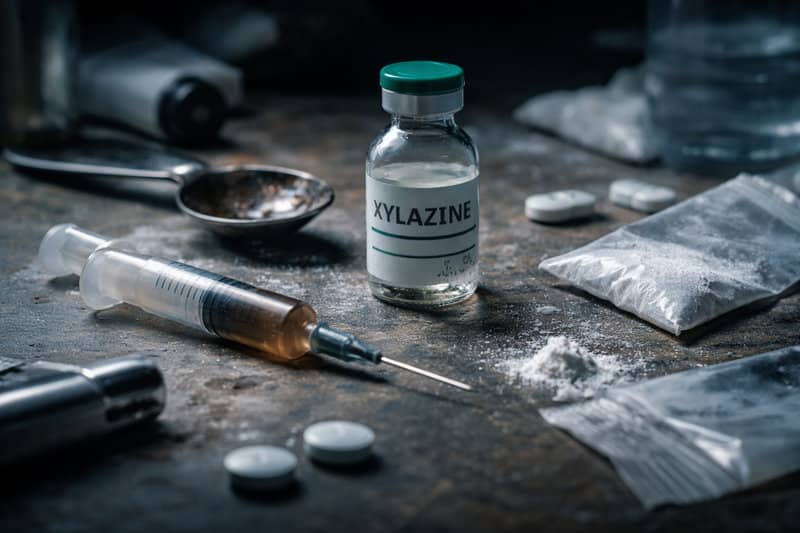
Xylazine is a powerful sedative, muscle relaxant, and analgesic developed in 1962 and approved exclusively for use in animals. It is not approved for human use; in fact, it was specifically rejected because of its severe central nervous system depressant effects.
On the street, Xylazine goes by the names "tranq" (or "tranq dope" when mixed with fentanyl or heroin). It has also earned the grim nickname the "zombie drug," a reference to the deep, stupor-like sedation it induces and the severe open skin wounds it causes in chronic users. Drug traffickers began adding it to fentanyl for a simple reason: fentanyl's high lasts only about 30 minutes, while Xylazine can extend that effect to as long as 72 hours. Xylazine is currently an unscheduled and uncontrolled substance under federal law. As a result, there are no standardized guidelines or oversight for its distribution, making it impossible to verify accurate dosing or to determine what else may be in it.
How Widespread Has It Become?
The spread of Xylazine has been both rapid and alarming. It was first detected in the domestic drug supply around 2015, and its usage was concentrated almost entirely in the Northeast. But by 2022, it had been identified in 48 out of 502 states and was linked to nearly 11 percent of all fentanyl overdose deaths, a 279 percent increase from 2019. As of late 2024, the DEA had found evidence of Xylazine in 49 states.
The numbers are staggering. Overdose deaths involving Xylazine rose nearly twentyfold between 2015 and 2020.3 In Philadelphia, Xylazine was present in roughly 91 percent of street fentanyl samples by 2021.4 In April 2023, the White House Office of National Drug Control Policy formally declared fentanyl adulterated with Xylazine5 an emerging drug threat, a designation that triggers a coordinated federal response.
Xylazine Is Moving West
For several years, Xylazine was primarily a Northeastern problem. That is no longer the case. Xylazine-positive overdose deaths have increased by an estimated 750 percent in the Western United States and more than 1,100 percent in the South.5 The Midwest has seen significant increases as well.
Because Xylazine is unscheduled, it moves easily through the same distribution channels that carry illicitly manufactured fentanyl and is often added to drugs at multiple points along the supply chain. This means buyers frequently have no idea it is present in the drugs they purchase. Communities in the West, already struggling with fentanyl and methamphetamine, are now confronting Xylazine without the awareness or clinical expertise that Northeastern cities have developed through years of hard experience. Here in our women's inpatient rehab in Idaho, we see this firsthand with a growing number of Xylazine users seeking our services.
What Xylazine Does to the Body
Xylazine is not an opioid, but its effects overlap dangerously with opioid intoxication.
Its effects on the body include:
- Extreme sedation
- Slowed breathing
- Dangerously low blood pressure
- Slowed heart rate
- Amnesia
- Loss of motor control
When combined with fentanyl, these depressant effects compound each other, dramatically increasing the risk of respiratory failure and death.
However, one side effect can be more disturbing; chronic use can cause severe skin and soft tissue damage. Users develop deep, necrotic wounds known as ulcerations that can appear at injection sites and other locations on the body, suggesting a systemic effect. These wounds can become massive and infected and, in extreme cases, have required amputation or skin grafting. Because Xylazine is not included in routine toxicology screens, it may go undetected in clinical settings, complicating both overdose treatment and wound care.
Why Narcan Doesn't Work on Xylazine
This is perhaps the most critical public health reality about Xylazine: naloxone (Narcan) does not reverse a Xylazine overdose.
Narcan works by blocking opioid receptors. Xylazine does not act on opioid receptors, so naloxone has no effect on its sedative or respiratory depressant properties. If someone has overdosed on a fentanyl-Xylazine combination, naloxone may reverse the opioid portion, but the Xylazine component will remain active. The person may still be deeply sedated, still have compromised breathing, and still be in danger of dying.
This does not mean bystanders should stop carrying Narcan. Reversing the opioid component can still be lifesaving. But a person who does not fully wake up after receiving properly administered Narcan may be dealing with Xylazine and requires emergency medical attention regardless. Administering higher or repeated doses of naloxone will not help. Your best bet is to maintain an airway, keep the person stable, and call 911. This naloxone resistance is one of the main reasons Xylazine has been so deadly.
How to Get Off Xylazine Safely
Attempting to stop Xylazine without medical supervision is genuinely dangerous. When the drug is removed, the central nervous system can become overactive.
An overactive central nervous system can include the following symptoms:
- Severe anxiety
- Agitation
- Elevated blood pressure
- Rapid heart rate
- Sweating
- Tremors
- Insomnia
- Nausea
Withdrawal typically begins within 8 to 24 hours of the last dose. Because most people using Xylazine are also using opioids, simultaneous opioid withdrawal makes the syndrome even more complex and medically challenging.
There is currently no FDA-approved treatment specifically for Xylazine withdrawal, but medical professionals have developed effective protocols. Clonidine, a blood pressure medication with properties similar to Xylazine, is generally the first-line agent for managing symptoms.6
Buprenorphine or methadone may be used concurrently for opioid withdrawal. A gradual taper is typically recommended over abrupt cessation, and wound care is an essential component of recovery for many users, whose skin ulcerations require ongoing treatment. Xylazine addiction recovery is possible with the right help.
Residential Treatment as a Path to Recovery
One of the most effective settings for detoxing from Xylazine and beginning sustained recovery is a residential drug treatment program. Inpatient rehab provides 24-hour medical supervision during the acute withdrawal phase. This is often lifesaving given the cardiovascular and neurological risks involved. Patients have access to physicians and nurses around the clock, with medications to manage symptoms as they arise.
Beyond medical stabilization, residential treatment addresses the psychological dimensions of addiction through individual and group therapy, cognitive behavioral therapy, trauma-informed care, and peer support. An immersive environment removed from the triggers that fueled drug use is a traditional addiction treatment plan. Dual-diagnosis treatment can be integrated for those managing co-occurring mental health conditions. Residential addiction treatment also allows clinicians to assess and treat the skin wounds that many Xylazine users arrive with.
A Crisis That Demands Attention
Xylazine is in nearly every state, moving rapidly, causing devastating physical harm, and resisting the overdose reversal tool communities have depended on for years. Recovery is possible, but it almost always requires the benefits of a residential program. If you or someone you love is using street drugs, assume Xylazine may be present. Carry Narcan, use Xylazine test strips when available, never use alone, and know that help is available.
If you're a woman struggling to get off of Xylazine, reach out to a "center for women's treatment for Xylazine addiction near me" to get started.